- upravo sam gledao tvoj album sa ekspedicije po himalajima....da li znas srpski jezik
- I just looked at your album with expedition through the Himalayas .... did you know the Serbian language
- SaturdayBrian Perich
- Hi Dragan,
I don't speak the Serbian language, but my father speaks fluently (with my Baba who passed away this year, 100 years, 86 years in Canada, she came from Romania. My grandfather came from Bosnia, in 1910, he was born in 1887. Both moved to Canada.
Thanks for visiting my album, I will translate into Serbian next time!
Brian (:

SaturdayDragan Babović- Walks of life we Serbs are strange.
My son went to LA and his children will not know the Serbian language, maybe save name, who knows!
SaturdayDragan Babović- Your bike is unusual.
Few people use bicycles for travel with buffer.
I travel with my old CRO-MO, made in 1992 SPECIALIZED, ROCKHOPER
SaturdayDragan Babović- Tvoj album je fenomenalan. Nasmejan i optimistican. vidi se da si sve vreme uzivao u putovanju. Veliki pozdrav iz Beograda.
- SaturdayBrian Perich
- Your bike is unusual.
Few people use bicycles for travel with buffer.
I travel with my old CRO-MO, made in 1992 SPECIALIZED, ROCKHOPER
11 hours agoDragan Babović
Tvoj album je fenomenalan. Nasmejan i optimistican. vidi se da si sve vreme uzivao u putovanju. Veliki pozdrav iz Beograda.
Reply (translated to Serbian, is this correct?)
Драган, ценим вашу подршку поруку и комплимената на мом бициклизам рутина, експедиција је била проширење краће вожње сам урадио више од мог живота. Време је да вози велики, тако да сам воз за сада. Возим планински бициклизам за обилазак, јер искрено, ово комплетан мотор је $ 400 долара и све што сам могао приуштити у 2009. Ја заменио све компоненте, рециклажа делова од скупље 2008 Гари Фисхер ХиФи Делуке Купио сам користи, сам се вратио заједно Гари Фисхер, и продао га, дајући новац назад са мојом женом. Тешко да потроше новац, ја сам живи на малом приход у Кореји, већина зараде иде да нахрани породицу, плаћају комуналне услуге, а у суштини живимо. Ја ћу возити истом кадру са различитим компонентама (исти 2008 Фокс, РЛ 120мм виљушком и Бонтрагер дршку), све Схимано овај пут. Користио сам СРАМ Кс7 Померачи и Кс9 позади дераиллер на ХималаиасКс2011 експедиције и Авид Јуици пет хидрауличне кочнице, то је све промењено у Схимано СЛКС цранксет, СХИМАНО ДУРА-АЦЕ 9-степеним ланац, Схимано ЛКС задњи дераиллер (рециклирани) и Схимано Деоре ЛКС напред дераиллер и Дуал-Деоре ЛКС Аутоматско освежавање Померачи и сајла кочнице постављене на Авид Лб7 планину
Dragan, I appreciate your supportive message and compliments on my cycling routine, the expedition was an extension to the shorter rides I have done over my lifetime. It's time to ride big, so I train for it now. I ride the mountain bike for touring, because honestly, this complete bike was $400 dollars and all I could afford in 2009. I replaced all the components, recycling parts from a more expensive 2008 Gary Fisher HiFi Deluxe I bought used, I returned the Gary Fisher together, and sold it, giving the money back to my wife. It's difficult to spend money, I am living on a small income in Korea, most of the earnings go to feed the family, pay the utilities, and basically live. I will ride the same frame with different components (same 2008 Fox RL 120mm fork and Bontrager handlebar), all Shimano this time. I used SRAM X7 shifters and X9 rear derailler on the HimalayasX2011 expedition and Avid Juicy Five hydraulic brakes, that is all changed to Shimano SLX crankset, Shimano Dura-Ace 9-speed chain, Shimano LX rear derailler (recycled) and Shimano Deore LX front derailler and Dual-Deore LX rapid fire shifters and cable brake lined to Avid BB7 mountain bike calipers, fairly bomb-proof bike for bicycle touring and capable off-road, and in expedition situations of long distance and terrible roads, which are fun, because it makes the journey that much more exciting and challenging.
about an hour agoDragan Babović- Excellent job you did.
For bicycle travel should be easy and very good quality.
Commemorate the components that may be of importance but there are other things that are important.
For such a difficult journey it is very important rear wheel, he suffers the most impact and weight.
For me, the more important types of rear wheel gear boxes.
about an hour agoDragan Babović- Yes, life is an uphill battle, full of uncertainty.
make money is an uphill battle.
spend the money is an uphill battle.
decide to spend what is an uphill battle.
I know it well, I have three children ......
Greetings from sunny Belgrade
Dragan
- 2 minutes agoBrian Perich
- Oh wow...I read your words, this is my life too!!!!! I have two children and a lovely Korean wife that controls all the money, I usually have little to spend, but I made exceptions to prepare for expeditions.
Yes, the rear wheel is VERY IMPORTANT..I cracked my Bontrager Race Disk from high altitude pressure changes, road pounding/damage, but the wheel stayed straight with some alignment (twice on the trip), the wheel had an internal crack 360 degrees for the rest of my journey.
I ordered a used DOWNHILL wheel for replacement of the Bontrager, and have a Mavic in the front. I will take a photo, the wheel has not arrived yet in Korea, everything takes months to get here for me.
Tough, tough, tough. My life is a reflection of the difficulties endured for PLEASURE on the expedition this year. Very tough, just try to enjoy what moments I actually can, forget the rest of the challenges!
(: Cheers, great message, I really appreciate it!
Brian --- South Korea
http://korean-world.blogspot.com/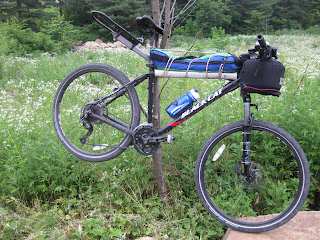


Monday, November 28, 2011
WT: Correspondence with Dragan Babović - Adventure Cyclist in Belgrade


Friday, November 25, 2011
Repost: Technical habits of Chris Akrigg @Mongoose & Types of Mountain Biking
For 4 min 45 seconds of film, this is about all the inspiration I needed to get out (tomorrow) and ride another 150K for the weekend. Chris Akrigg of Mongoose demonstrates the finer lines of mountain biking control. Obviously, the mountain bike is designed to perform in all road conditions, there are distinctions though, let's have a look in each category. This is an incredible video, glad to share it here too.
What are some popular styles of Mountain Biking?
(XC) Cross-Country: is the most popular style of mountain biking. Cross-country trails consist of a mix of rough forest paths (tree roots and rocks exposed) and narrow mountain trails that are ideal for this type of riding that are known as 'single track'. In other areas between forested areas, there are also fire roads (gravel roads in timber areas or through protected national forests), and even paved paths connecting other trails. Riding or racing is also only deemed cross-country if the technical complexity of the trails is easy or moderate. Trails nearly impossible even to experienced riders are more often dubbed "all-mountain", "freeride", or "downhill".
(DH) Downhill: is a gravity-assisted time trial mountain biking event. Riders race against the clock, usually starting at intervals of 30 seconds (seeded from slowest to fastest), on courses which typically take two to five minutes to complete. Riders come from all around the world.
Freeride: is closely related to downhill cycling and dirt jumping focused on tricks, style, and technical trail features. It is now recognized as one of the most popular disciplines within mountain biking. Freeride bicycles tend to have shorter wheel bases, and lighter components than Downhill bikes.
(AM) All mountain: these full-suspension mountain bikes are crossed between Freeride and XC. These bikes have long-travel dual-suspension and are suited for big mountain terrain. The frames are made from aluminum, carbon, and dual composite builds. Take this simple example: a 2008 Gary Fisher HiFi Deluxe. This model was built with Bontrager Race Disc wheelsets and handlebars (by the Trek company). The traditional double-walled rims are ultra-durable and featured SUP-tubeless ready applications. The standard rims on most mountain bikes in this category are 26" and feature 6-bolt hubs to mount 185mm front and 160mm rear disk rotors powered by Avid Juicy Five hydraulic brakes. The crankset is the standard Shimano Deore LX, and drive train is complimented with SRAM X7 rapid-fire shifters, SRAM X9 rear derailer and Shimano LX front derailer using a 9-speed chain. These mountain bikes have 27 external gears, while newer models have switched to 2X10 (2 gears up front, 10 gear cassette in the rear). Popular components are now the 2011 Shimano Deore SLX, XT and ultralight (and expensive) Shimano XTR models. SRAM produces similar component groups like the X7, X9, X.O, or ultralight X.X. components and these shifters are designed to work with complimenting SRAM rear-deraillers only. Depending on your bike and model and price, these components will be available to you to choose from.


An introduction to types of Mountain Bikes. Thanks for visiting. Good luck, enjoy the rides!
Monday, November 21, 2011
Cycling in Korea: Gangwon-do - a place for bicycle touring micro adventures! Puma/Cougar sightings too
I told a true story about cycling in Gangwon-do, Korea and having a Cougar (Puma, Mountain Lion) jump out in front of me, growl like a tiger, leap to the mountain, growl again, and have it's cub rustling in the brush over a barbed wire fence that the mother obviously leaped over, we went back to that site together, the Tiger Conservation researcher and myself last week, we found dung samples for the lab, hope we determine the DNA, here's the story in blog, welcome to the Korean-World, a link to South Korea and Adventure Living.


Back up near Jeongseon with the Tiger/leopard Conservation Authority to find DNA samples

Cycling up Daegwallyeong (Hwy 456 on Google Maps)

Inner mountain Highway 59 passes along the Odaecheon River (Jinbu-Taebaek route)

Cougar, Puma, Mountain Lion are different names to describe this wild cat.

I cycled from Gangneung City to Jeongseon City

Fog entering Pyeongchang-gun, from sea level to about 850 meters in 20km

Cycling in Korea, something I love to do. Join the Facebook group!

Sunday, November 6, 2011
HimalayasX2011, Western China Expedition supporting IDEAS & ETE [stage one, Urumqi, Tian Shan Mountains, Taklamakan Desert, Karakoram, Himalayas]


 Between 2008-2012, I have accumulated thousands of kilometers and hours
exploring the South Korean peninsula. Although politically and geographically land-
locked between North Korea and the turquoise waters of the northeastern Pacific
Ocean, I've successfully completed numerous cycling adventures in South Korea,
as well as, independent expeditions across western China and Outer Mongolia.
Looking back to 2009From Gangneung City, Gangwon-do where I live with my family, I have ridden toBusan, Gyeongsannam-do Province (5 times in 2009 alone, 20 days, 2000km)meeting other cyclists while out riding.I have bicycled from Seoul to Gangneung through Seoraksan National Park. I havecycled from Seoul to Andong to Daegu, I have cycled from Ansan to Daecheon BeachBoryeong and Byeongsanbando National Park. I have cycled many places in betweenon simple bicycles.I have cycled on Deokjeokdo Island, I have competed in the Korea Randonneur SBS
(Seoul-Busan-Seoul) 1000km, 75 hour bicycle endurance race (finishing 478km in 26
hours*), I will return to the event in 2012 and make a second attempt.Pursuing an interest in cycling and promoting the activity here in South Korea, I have
built a website dedicated to Cycling in Korea, it's called the Korean-World.Every month, approximately 3000 international guests visit this adventure blog,enjoy free updates about adventure cycling, expeditions, all packed with ideas tolaunch other expeditions. I intend to share all this information and links to many ofmy favorite blogs, linking other explorers and adventurers free of charge.Details of the expedition, HimalayasX2011:3200km/1800miles by bicycle, 500km by hitchhiking, 3240km by standing-room only train*, 1028km bus*
7968km of extreme travel with a bicycle, train, bus.
I encountered local cultures, languages, food, transportation and used old paper maps as navigation.
This was not an expedition about crossing the longest distances (world circumnavigation riders have done all that).Body weight: before expedition= 95kg. completing expedition= 70kg.Objectives of this expedition were about:
*learning to document expedition travel in a journal
*learning to record video and photos that can illustrate, as well as educate from life experiences on the road
*to experience places that I have seen through maps;
*to experience some of the world's best desert highways, mountain routes while challenging the terrain, climate,
topography and elevations (above 4000 meters)
*learn to ride a bicycle self-sustained for an extended journey without ride support, backups, or sag wagons.
*to raise awareness of several, non-profit organizations
*to build networks with other explorers and share
*to prepare for future expeditions
*to live to face my inner fears, overcome physical and mental challenges and
to live my dreams while on an independent journey.Travel Route:
Starting from South Korea, I crossed the Sea from the Incheon ferry terminal on a
passenger ferry to Tianjin (30 hours), after I cycled through Beijing, visited the
Summer Palace and Forbidden City, and Chairman Mao's mausoleum, and made newfriendships with many Chinese and found help from other international people while
visiting the capital of China.
I bought a train ticket for Urumqi, Xinjiang/Uyghur Autonomous Region and stood
with my bicycle for 36 hours (3240km), the overcrowded train ticket cost 50,000
Korean Won, an alternative to a 1,500,000won flight to Urumqi airport from Korea.Finally, I arrived at the start of the cycling expedition, Urumqi, Xinjiang/Uyghur
Autonomous Region of western China. From Urumqi, I immediately started out cycling
in the open desert highways.
From the city of Urumqi, you enter the Borohoro ranges of the Tian Shan Mountains,
these high deserts contain rivers winding through the giant sand colored mountains,
complete with camels walking these tracts, both roads and rivers to the locals.
After crossing the Tian Shan ranges, it's desert again in continuum. I managed to ride
the G314 Karakoram Highway which runs parallel to the original route still used by
locals, a bumpy route, but not the worst in the area.
Along the highway, there were long stretches without settlements or villages.
If you needed water, it was best to ask passerby's on the highway, which is why I
stayed close to this route.
I met two Chinese friends before crossing the Tian Shan, and I promised to visit their
families in Korla, this happened to be a great diversion for the expedition.
More deserts and finally the oasis that is Korla, a mixture of Uyghur and Chinese
cultures, a mixture of foods, music, languages, and development projects, a new and
old city, modernizing in China today.
Once the weekend passed by in Korla, it was a long ride back to the Tian Shan, to
reach Luntai. This is the last official Uyghur settlement entering the Taklamakan
Desert (455km after Luntai/552km from Luntai to Mimfeng).
The exit to the Taklamakan Desert was reached in 5 days, 552km, 6 pieces of Nan
bread, 1 bowl of noodles (cooked at a well station), oatmeal, raisins, apricots, H2O
It doesn't take much to cross the desert with only a small food supply, it's definitely
enough. It's hot and dry, it requires patience and planning to be out in the sun, or
taking cover under a sign post in the middle of the day, under a survival blanket on
the side of the road, sleeping in a pump station, or napping under the sunlight on the
side of the road, which road was it?
The Tarim Desert Highway was built and maintained by Sinopec and China Petro, and
the purpose to keep the oil coming out of the ground.
There are 108 wells across 552km of the Taklamakan desert, although the water
causes bowel irritation (nothing stays inside believe me, this would explain the small
ration of Nan bread), H2O provides basic hydration.
The Taklamakan Desert is a relatively flat landscape, but you will ride over rolling hills.At night, the sandstorms would whisk across the desert floor and flat treacherously
against the thin walls of the tent.I enjoyed my time in the desert, and went on to ride the G315 Southern Silk Road,
through some amazing villages and towns along with the Uyghur cultures that have
flourished there since centuries ago.
After Yecheng, I leave civilization and the G315 and follow the S219 towards the
Himalayas.
This section of highway had all disappeared into a collosal road construction project
when I arrived here, I navigated on the stone and dirt tracks, dodging transport
trucks and heavy machinery run by sun-baked road construction workers.
Everywhere along this route was dusty, dry, but the people I encountered were
friendly. Further up in the mountains, I hitch hiked with mining workers and spent a
night sleeping at their camp. I repaired my rear wheel, already cracking from the
elevation changes, hard road conditions, and weight of the panniers.As I reached the Himalayas of Xinjiang Province, China on my own, it was one of the
greatest moments in my life.The expedition continued from Cudi Mountain of the Himalayas to Kashgar, where I
flew out to Chengdu, Sichuan Province to begin the second stage of the expedition.
Independent travel has been restricted in Tibet for many years, making the journey
either dangerous or illegal according to the Chinese officials that govern there.
The HimalayasX2011 expedition was completed in less than 60 days, an independent
expedition, self-supported and self-sponsored too. The expedition wasn't about
setting a world record for cycling, it was intended to become an educational journey
supporting several non-profit foundations that are involved in community
development, good will missions, and charity.While living and teaching English in Korea, cycling has become more than a hobby, it
is a living adventure that is continually growing and challenging me.
Brian Perich - Explorer, Adventurer, Teacher, Father.- RECENT ACTIVITY
- RECENT ACTIVITY




Subscribe to:
Posts (Atom)